
social media has become one of the most important channels for businesses to connect with customers. Whether you’re running a small local business, building a personal brand, launching an online store, or working for a large company, social media can help you reach potential customers and build lasting relationships.
However, successful social media marketing involves more than simply creating an account and posting occasionally. You need to understand your audience, choose the right platforms, create valuable content, and measure your results.
This beginner’s guide explains the fundamentals of social media marketing and provides a practical framework for getting started.
Social media marketing is the use of social networking platforms to Social Media Marketing: 12 Best Tips for Beginners promote a business, product, service, organization, or personal brand.
It can include activities such as:
Publishing organic postsS
- Creating short-form videos
- Sharing educational content
- Responding to comments and messages
- Building online communities
- Working with creators
- Running paid advertisements
- Analyzing performance
The main objective isn’t always to make an immediate sale. Social media can also help businesses increase awareness, build trust, educate customers, generate leads, and maintain relationships with existing customers.
Billions of people use social platforms, making them valuable places for businesses to reach potential customers.
One major advantage is that social media allows two-way communication.
Traditional advertising often involves sending a message to an audience.Social Media Marketing: 12 Best Tips for Beginners Social media allows customers to respond, ask questions, share content, provide feedback, and communicate directly with businesses.
Social media can help a business:
- Increase brand awareness
- Reach new audiences
- Generate website traffic
- Build customer relationships
- Generate leads
- Promote products and services
- Provide customer support
- Establish credibility
- Understand customer interests
For small businesses, social media can also provide an opportunity to compete for attention without requiring the same resources as large traditional advertising campaigns.
1. Define Your Marketing Goals
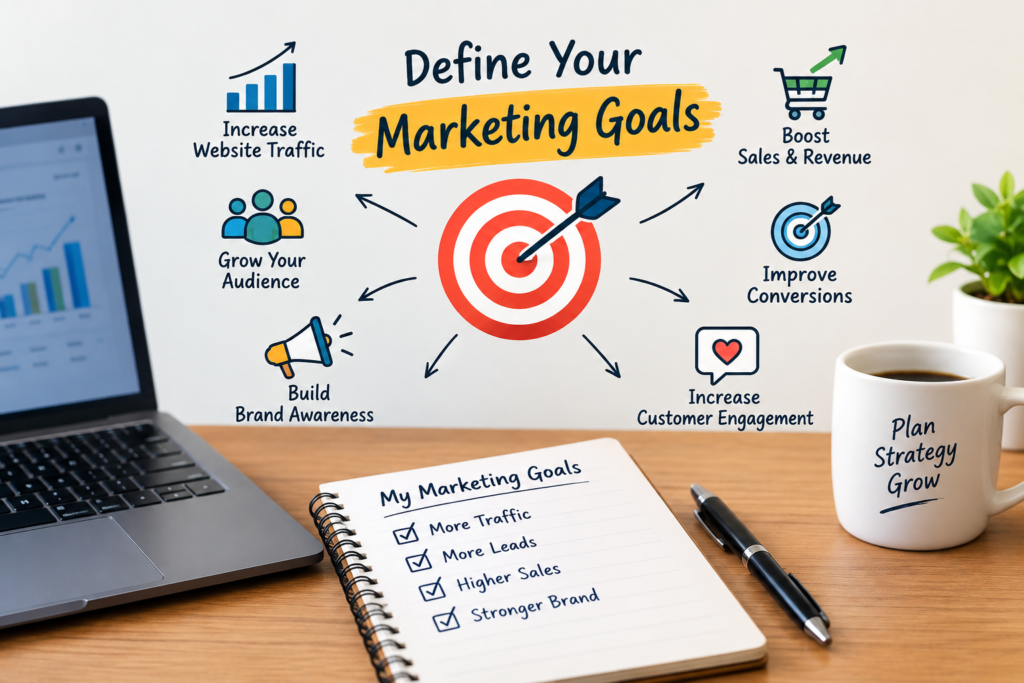
Before creating social media content, decide what you want to achieve.
Your goals should be specific and measurable.
For example:
- Increase website traffic by 20% in six months
- Generate 100 qualified leads per month
- Increase online sales by 15%
- Build a community around your brand
- Improve customer engagement
Different goals require different strategies.
If your goal is brand awareness, you may focus on reach and video views.
If your goal is lead generation, Social Media Marketing: 12 Best Tips for Beginnersyou might focus on educational content, landing pages, and lead forms.
If your goal is sales, you may emphasize product demonstrations, customer reviews, and targeted advertising.
2. Identify Your Target Audience
You can’t create effective content without knowing who you’re trying to reach.
Think about your ideal customer.
Consider:
- Age
- Location
- Interests
- Occupation
- Problems
- Goals
- Buying behavior
- Preferred platforms
- Types of content they consume
For example, a business selling professional software might focus heavily on LinkedIn,Social Media Marketing: 12 Best Tips for Beginners while a fashion brand may prioritize visually focused platforms.
The goal isn’t to collect as much demographic information as possible. The goal is to understand what your audience needs and how you can provide value.
One of the biggest beginner mistakes is trying to manage every platform simultaneously.
Instead, start with one or two platforms where your target audience is most active.
Common platforms include:
Useful for visual content, short videos, product discovery, creators, and lifestyle brands.
Useful for communities, local businesses, customer communication, advertising, and a wide range of content formats.
YouTube
Excellent for long-form video, tutorials, educational content, reviews, and entertainment.
Particularly valuable for professional networking, B2B marketing, industry content, and personal branding.
TikTok
Focused heavily on short-form video and discovery-driven content.
Useful for visual discovery, inspiration, and businesses operating in relevant categories.
The best platform isn’t necessarily the one with the most users. It’s the one where your target audience and business objectives overlap.
Your profile is often the first place someone goes after discovering your content.
Make sure your profile clearly communicates:
- Who you are
- What you offer
- Who you serve
- Why people should follow you
- How people can contact you
Use a recognizable profile image or logo and write a clear description.
If appropriate, include a link to your website or a relevant landing page.
Your profile should look professional and consistent with your overall brand identity.
5. Create a Content Strategy

Posting randomly can make social media difficult to manage.
A content strategy gives you a clear plan.
Start by defining several content pillars.
For example, a digital marketing agency might use:
- Educational content
- Industry news
- Marketing tips
- Client success stories
- Behind-the-scenes content
These pillars make it easier to consistently generate ideas.
A useful content mix could include:
- Educational posts
- Short videos
- Tutorials
- Infographics
- Customer stories
- Questions and polls
- Product demonstrations
- Behind-the-scenes content
- Industry insights
The exact mix should depend on your audience and goals.
6. Focus on Valuable Content
People don’t follow businesses simply because they want advertisements.
Your content should provide something useful or interesting.
Ask yourself:
“Why would someone want to see this post?”
It might teach them something,Social Media Marketing: 12 Best Tips for Beginners solve a problem, entertain them, inspire them, or help them make a decision.
For example, instead of posting:
“Buy our new product!”
You could create a short video explaining a common problem and demonstrate how your product can help solve it.
This approach provides value while naturally introducing your product.
7. Use Video Effectively
Video has become an important part of social media marketing.
You don’t need expensive equipment to begin. A smartphone, good lighting, clear audio, and useful ideas can be enough.
Video content could include:
- Tutorials
- Product demonstrations
- Frequently asked questions
- Educational tips
- Behind-the-scenes videos
- Customer stories
- Interviews
- Short explanations
Focus on delivering value quickly, especially with short-form videos.
The opening seconds are important because viewers can scroll away immediately if the content doesn’t capture their attention.
8. Build Engagement and Community
Social media isn’t just about publishing content.
You also need to interact with your audience.
Respond to comments and messages when appropriate. Ask questions and encourage meaningful conversations.
For example, a restaurant could ask:
“What’s your favorite dish from our menu?”
A fitness brand could ask:
“What’s the biggest challenge you face when staying consistent with exercise?”
These questions encourage people to participate and can provide useful insights into customer preferences.
Social Media Marketing: 12 Best Tips for Beginners Remember that engagement should feel genuine rather than automated.
9. Create a Posting Schedule
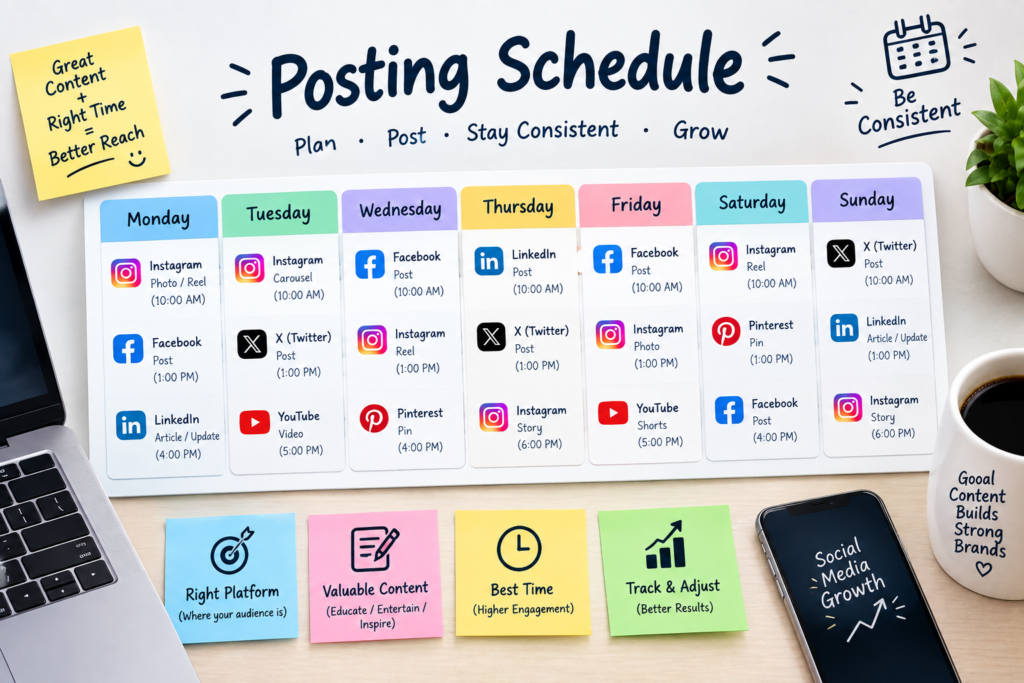
Consistency is important.
You don’t necessarily need to post multiple times every day. Instead, choose a schedule that your team can realistically maintain.
A content calendar can help you organize:
- Post topics
- Content formats
- Platforms
- Publishing dates
- Captions
- Creative assets
- Campaigns
For example, you might plan content several weeks in advance while leaving room for timely topics and current events.
Batching content can also save time. Social Media Marketing: 12 Best Tips for Beginners You can create several pieces of content during one session and schedule them for later publication.
Depending on the platform, hashtags and keywords can help people discover your content.
Don’t simply add dozens of unrelated hashtags.
Social Media Marketing: A Complete Beginner’s Guide Instead, use relevant terms that describe your content, industry, product, or audience.
Also pay attention to the words you use in captions,Social Media Marketing: 12 Best Tips for Beginners titles, descriptions, and on-screen text.
Many social platforms increasingly function as discovery and search tools, so clear descriptions can help your content reach people who are looking for relevant topics.
Organic content is valuable, but paid advertising can help businesses reach specific audiences more quickly.
Social advertising platforms allow businessesSocial Media Marketing: 12 Best Tips for Beginners to target audiences based on various characteristics and interests, depending on the platform and available options.
Paid campaigns can be used for:
- Brand awareness
- Website traffic
- Lead generation
- Product promotion
- App promotion
- Sales
Social Media Marketing: 12 Best Tips for Beginners
Start with a clearly defined objective and a controlled budget.
Don’t spend heavily before understanding what type of content and audience produce good results.
Test different creative approaches and measure the results.
12. Measure Your Results
One of the biggest advantages of digital marketing is that you can measure performance.
Social Media Marketing: 12 Best Tips for Beginners
Important social media metrics include:
- Reach
- Impressions
- Video views
- Engagement
- Click-through rate
- Website traffic
- Leads
- Conversions
- Sales
However, don’t focus on every metric equally.
If your goal is sales, likes alone aren’t enough.
If your goal is awareness, Social Media Marketing: 12 Best Tips for Beginnersreach and impressions may be more relevant.
Always connect your metrics to your original marketing objectives.
Beginners often make several avoidable mistakes.
Posting Without a Strategy
Random posts can make it difficult to build a recognizable brand.
Focusing Only on Selling
Constant promotions can make audiences lose interest.
Ignoring Comments
Social media is designed for interaction. Ignoring your audience can weaken relationships.
Trying Every Platform
Managing too many platforms can reduce content quality and consistency.
Buying Followers
Artificial followers don’t necessarily become customers and can make engagement metrics less meaningful.
Expecting Instant Results
Building an audience and earning trust takes time.
Copying Competitors
Study competitors for ideas, but develop your own voice and approach.
If you’re starting from zero, follow this simple process:
Step 1: Define one or two marketing goals.
Step 2: Identify your ideal audience.
Step 3: Select one or two relevant platforms.
Step 4: Optimize your profiles.
Step 5: Choose three to five content pillars.
Step 6: Create a realistic content calendar.
Step 7: Publish consistently.
Step 8: Respond to your audience.
Step 9: Test different content formats.
Step 10: Review your analytics and improve your strategy.
Social Media Marketing: 12 Best Tips for Beginners
This approach is much easier to manage than trying to build a huge social media presence immediately.
Conclusion
Social media marketing can be a powerful tool for businesses of all sizes, but success doesn’t come from simply posting more content.
A strong strategy begins with clear goals and a deep understanding of your audience. From there, choose the right platforms, create useful content, engage with your community, maintain consistency, and measure your results.
Most importantly, remember that social media marketing is a long-term process.Social Media Marketing: 12 Best Tips for Beginners Your first posts may not receive huge amounts of attention, and that’s normal. Use your data to understand what your audience responds to, experiment with different formats, and continually improve.
Start small, stay consistent, provide value, and build genuine relationships with your audience. Over time, these habits can turn social media from a simple communication channel into a valuable part of your overall digital marketing strategy.
author abhinavhttps://abhinavn.in/